
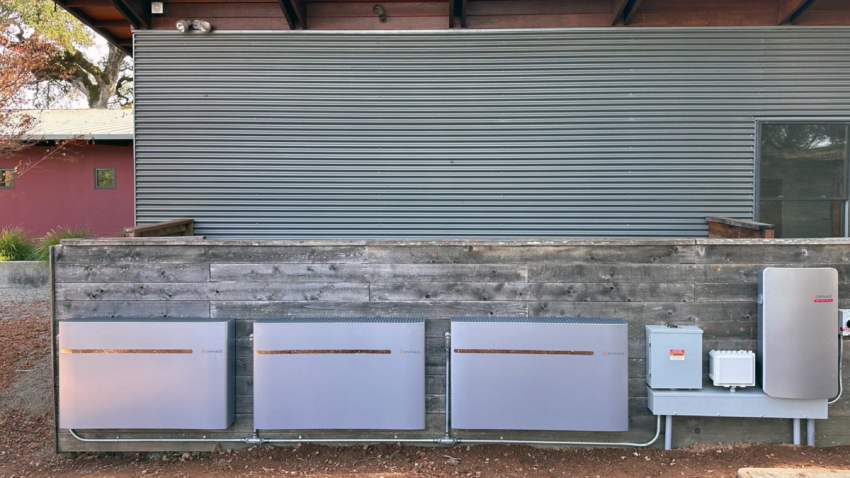
A lot of homeowners start with the same question: if solar panels are going on the roof, does a battery need to come with them?
The honest answer is no, not always. But in most cases for new installations, a battery ends up being a necessary part of the whole setup.
Solar panels make power during the day. A battery gives that extra power somewhere to go. Instead of sending all of it away or only using solar when the sun is out, the home can hold onto some of that energy and use it later. That is the big reason solar battery installation keeps coming up in so many conversations.
For some households, a battery is mostly about backup power. For others, it is about getting more value out of solar. For a lot of people, it is both.
Why Are So Many People Asking About Solar Batteries?
Because the question has shifted.
A few years ago, most homeowners were mainly asking how many solar panels they needed and how much money solar might save. Those questions still matter. But now a lot more people are also asking what happens at night, what happens when the grid goes down, and how to rely less on the utility company.
That is where batteries come in.
A battery makes solar feel more flexible. It lets the home use stored solar energy after sunset, reducing how much energy you need to purchase from the utility. It can also help during blackouts or planned shutoffs. In places where outages are a real concern, that changes the conversation fast.
Does Every Solar System Need a Battery?
In most cases under the current Net Billing Tariff agreement with the utility, a battery is needed to maximize bill offset, lowering utility costs. Now that the utility does not credit you well to export your excess solar to the grid, a battery helps a lot with the return on your investment.
Not every household needs backup power but a battery becomes much easier to justify when the homeowner wants more than basic daytime solar production. If the goal includes backup power, more energy independence, or better use of solar after dark, then a battery starts looking a lot less optional.
So the better question is “What does this home need solar to do?”
What is The Difference Between a Savings Battery and a Backup Battery?
This is one of the most important parts of any solar battery installation conversation.
A savings battery is mostly there to store extra solar power and use it later, usually when electricity from the grid costs more or when the sun is down. The savings battery will not provide backup power when the grid is down.
A backup battery can function as a savings battery but is also about resilience. It is designed to keep important parts of the house running during an outage. That might mean the refrigerator, a well pump for water, some lights, internet equipment, garage access, or a few outlets.
Some homeowners want both better day-to-day energy use and peace of mind when the power goes out.
Will One Battery Run the Whole House?
Sometimes, but not automatically.
This is where expectations matter a lot. A battery can absolutely keep parts of a home running, but whole-home backup depends on how much electricity the house uses and how much battery storage is installed.
A smaller setup may cover the essentials. A larger setup may support much more. Big loads like central air conditioning, electric heating, dryers, ovens, or pool equipment can burn through stored energy fast.
That is why installers usually talk about “must have” loads first. It is a much more useful conversation. Instead of trying to power everything, many homeowners choose to keep the most important things on and keep the system realistic.
Can a Battery Be Added Later?
Yes, a battery can be added to an existing solar system.
Let’s face it, things change. Synergy is always available to assist with your changing energy needs.
Some homeowners install solar panels first and wait on storage. Then, later on, the priorities change. Maybe outage concerns go up. Maybe utility rates change.
So while adding storage later can work well, it is still something that should be looked at carefully rather than treated like a quick add-on.
What Does the Installation Process Actually Involve?
Usually more than people expect.
A proper solar battery installation is not just hanging a battery on the wall and calling it done. There is usually a site visit, system design, electrical review, system design, permitting, installation, inspection, and final testing.
Placement matters too. The battery has to go in a spot that works for safety, code, access, and future service. Synergy will also explain how the system works and how monitoring works, because batteries are not something homeowners should be left guessing about.
Is Getting a Home Backup Battery Worth It?
For a lot of homeowners, yes.
If the goal is more control, better backup, and a solar system that keeps working harder after the sun goes down, a battery can be a very smart move. That is why a professional assessment matters. The best answer depends on the home, the electrical setup, the agreement with the utility and what the homeowner actually wants from solar.
Find Out If a Battery Makes Sense for the Home
Homeowners who are thinking about solar battery installation do not need a one-size-fits-all answer. Synergy Solar can help evaluate the home, the current electrical setup, and the household’s energy goals to figure out whether battery storage is the right move now, later, or not at all.
Reach out to our professional team today!
📞 Call Synergy Solar: (707) 244-7300