by Synergy Solar | Nov 20, 2025 | Uncategorized
If you’re exploring a solar and battery system for your home, one of the most helpful things you can provide us is your PG&E electrical usage data. This information shows your real energy consumption patterns hour by hour and day by day so we can design a system that’s sized correctly, maximizes savings, and matches your lifestyle.
To make the process simple, we’ve created a short walkthrough video that shows exactly how to download your usage data from PG&E.
👉 Watch the video here: https://youtu.be/ln8tdKy7rnc
Why This Data Is Important
Every household uses energy a little differently. Some see spikes in the afternoon from AC, others use more energy in the evening, and some have steady usage all day. Your actual data allows us to:
- Right-size your solar system (not too big, not too small)
- Determine the ideal battery size for backup power or time-of-use savings
- Accurately estimate your annual bill savings
- Create a proposal that’s tailored to you, not a generic guess
In short, the more accurate the data, the more accurate your proposal.
Let Us Know About Any Recent or Planned Home Modifications
While your past 12 months of usage tells us a lot, some changes around the home can significantly affect future energy consumption. If you have made any of the following changes in the past year OR if you are planning to make changes, please let us know so we can design your system accordingly:
- Switching from gas to electric appliances (e.g., electric stove, heat pump, electric water heater)
- Adding major amenities like a hot tub, pool, or well
- Purchasing or planning to purchase an electric vehicle (EV)
- Adding refrigeration, freezers, air conditioning or upgrading HVAC systems
- Expanding your home or adding an ADU
- Any other upgrades that might increase electricity use
These details help us size your solar and battery system not just for today, but for your future energy needs, ensuring better performance and long term savings.
Ready to Get Started?
The whole process to download your PG&E data usually takes less than five minutes. Click the link to watch the tutorial, download your data, and send it over when you’re ready. If you run into any issues or have questions, we’re always here to help!
by Justin Hiner | Nov 8, 2024 | Battery Storage Systems, Uncategorized

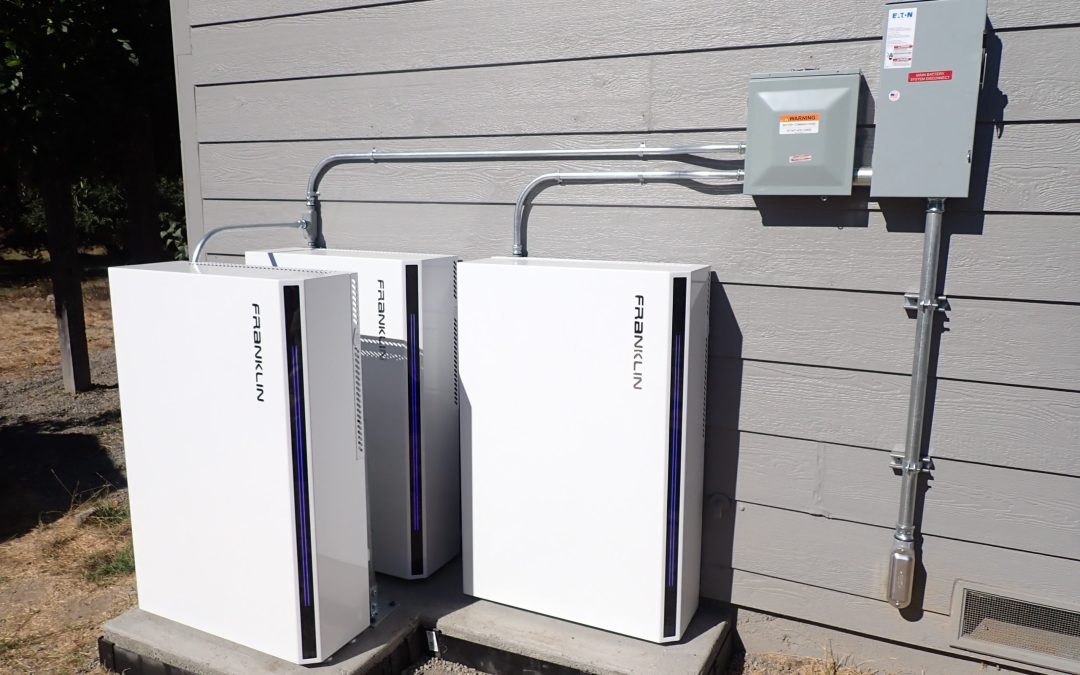
Testing Your FranklinWH Battery Backup System
Testing your FranklinWH Home Power system periodically ensures you’re prepared for unexpected outages and changes in energy needs throughout the year. This step-by-step guide will help you evaluate your system’s reliability across various conditions, from extreme temperatures to seasonal shifts in power demands.
Regular testing is beneficial for several reasons:
- Step 1: Start With a Safety Check
Before testing, review the user manual to get familiar with the system’s components and functions. Ensure that you know the location of your emergency shut-off switch. If you’re new to the system, it’s a good idea to have a second person nearby during the testing process.
Step 2: Check Battery Levels in the App
Make sure your FranklinWH battery has a sufficient charge level, ideally around 50% or higher, to simulate realistic conditions. Use the FranklinWH app to view the current charge level and system status. The app provides detailed, real-time data on energy storage and usage, which will be valuable throughout the test.
Step 3: Going Off-Grid – Simulating a Power Outage
To see how your system responds during a power outage, you can disconnect from the grid in two ways:
- Use the FranklinWH App’s Off-Grid Option: Within the app, go to Tools and select Go Off-Grid. This setting automatically disconnects your home from the utility grid and switches to battery backup. After a brief delay, the system should seamlessly begin powering your essential loads.
- Main Breaker Alternative: For those who prefer a manual approach, you can turn off the main breaker at your home’s circuit panel. This simulates a utility grid outage, causing the FranklinWH system to activate backup power mode.
The preferred method to test the system, is to locate your main circuit breaker panel and turn off the main breaker which will mimic an actual outage and give you a more realistic experience. Both methods will allow you to evaluate your battery’s response and efficiency in delivering backup power.
Step 4: Observe How the System Powers Essential Loads
With your system now in backup mode, monitor how it handles powering essential devices. The FranklinWH app provides real-time information on power consumption and battery levels, helping you track energy use and see how long your battery might sustain your critical loads.
- Experiment with Various Devices: Power up essential devices like TV’s or lighting circuits. By testing different combinations, you’ll get a better sense of how long the battery will last in these conditions.
- Monitor Discharge Rates: Watching the app’s real-time data, note the discharge rate and see how long the battery can sustain higher loads versus minimal power requirements.
Step 5: Extend Testing Periods for Deeper Insights
Running your home on battery power for different lengths of time—such as 30 minutes, an hour, or longer—can help you understand the system’s endurance. This insight is particularly helpful in understanding backup limits for longer outages or periods of heightened power demand.
Step 6: Restore Your System to Grid Mode
When the test is complete, simply reconnect to the utility grid. If using the app’s Grid Control setting, switch back to normal operation. For manual users, restore power by turning the main breaker back on. Your system will return to regular operation and begin recharging the battery for future needs.
Step 7: Review and Record Your Test Results
Once the test is complete, use the data captured in the app to evaluate system performance. Look for any areas where the battery may have discharged faster than expected or instances where specific appliances impacted runtime significantly.
Step 8: Re-Test Across Different Seasons and Conditions
For best results, plan to test your FranklinWH system periodically throughout the year. Seasonal changes in sunlight, temperature, and energy demands can impact system performance, so testing in various conditions is valuable.
- Hot Weather: Test during high-demand summer months to see how the battery handles cooling loads.
- Cold Weather: Winter testing reveals how shorter days and lower temperatures impact battery duration and performance.
- Rain and Humidity: Observe performance during wet or humid weather. FranklinWH systems are designed for durability, but periodic testing under these conditions can verify system resilience.
Conclusion
Regularly evaluating your FranklinWH system gives you valuable insights into its functionality and capacity to meet your backup needs. By following these steps, you’ll gain peace of mind, knowing your battery is ready to provide reliable power when it matters most.
by Justin Hiner | Nov 8, 2024 | Battery Storage Systems, Uncategorized
Testing Your Enphase Battery Backup System: A Step-by-Step Guide
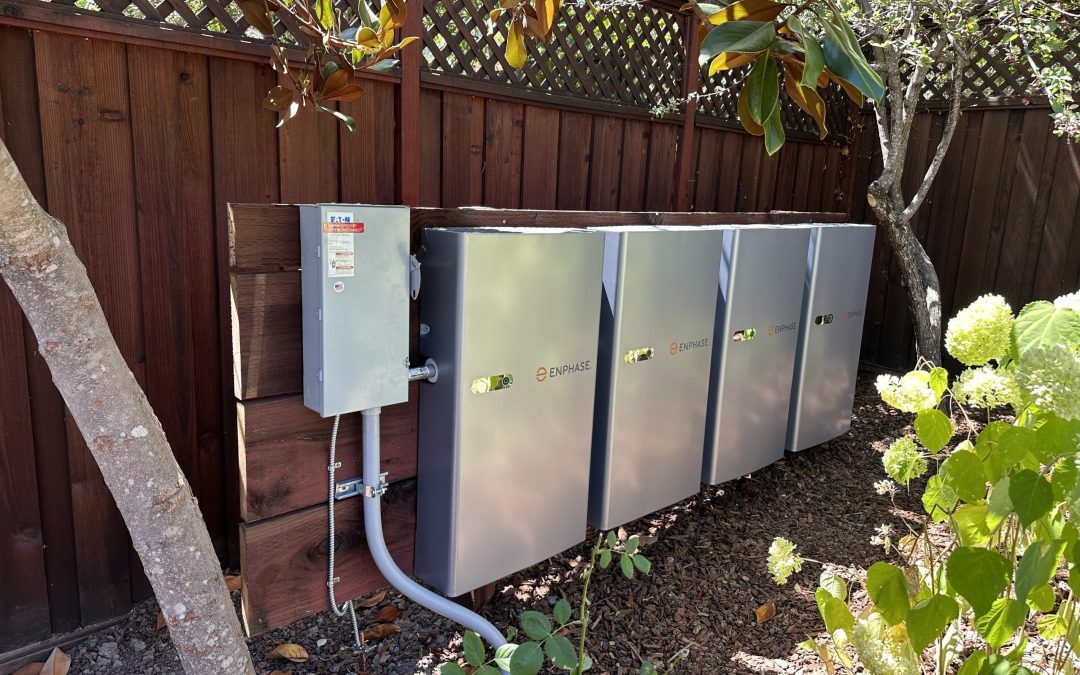
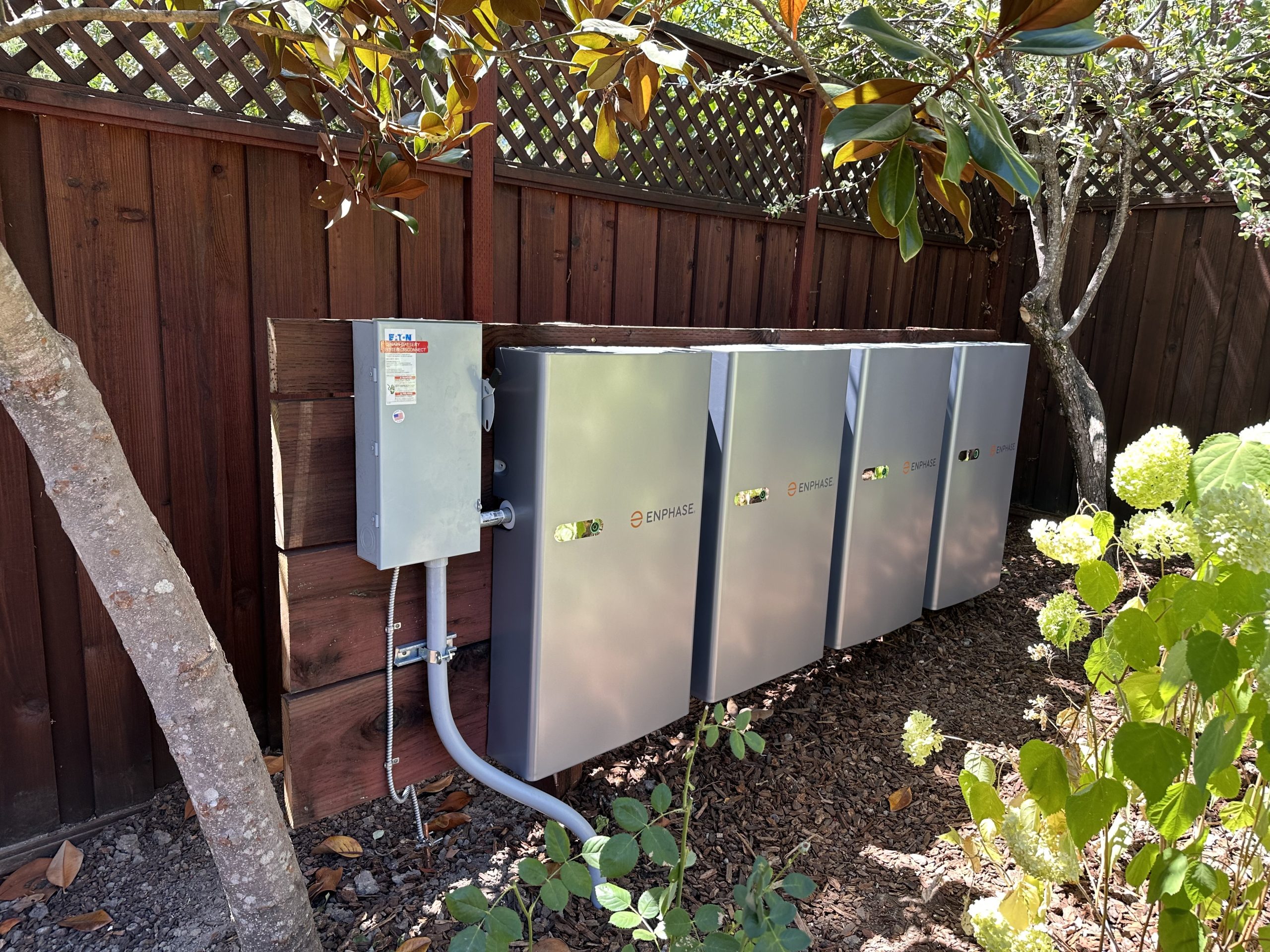
In an age where energy independence and sustainability are increasingly important, having a reliable battery backup system is crucial for powering your home during outages and in emergencies. Enphase, a leader in renewable energy solutions, offers battery backup systems that provide seamless power continuity. To ensure your system’s functionality, periodic testing is essential. In this blog, we’ll guide you through the process of testing your Enphase battery backup system.
Why Test Your Enphase Battery Backup System?
Testing your Enphase battery backup system is crucial for several reasons:
- Performance Verification: Regular testing ensures that your battery system is operating as intended, storing, and releasing energy efficiently.
- Early Issue Detection: Testing can help identify any potential issues before they escalate, allowing for timely maintenance and preventing system downtime.
- Optimal Utilization: By understanding how to monitor and manage your battery system, you can make the most of the energy it stores, leading to potential cost savings.
Step 1: Safety First
Before you start, make sure to follow safety precautions. Familiarize yourself with your system’s user manual and locate the battery emergency shut-off switch in case you need to stop the test.
Step 2: Verify Battery Charge
Ensure that your Enphase battery backup system has enough charge to perform the test. It’s recommended to have at least 50% battery charge before testing. You can check the battery charge level through your Enphase Enlighten monitoring platform or the Enlighten app.
Step 3: Simulate a Power Outage
To test the functionality of your Enphase battery backup system, you’ll need to simulate a power outage. This can be done through the Enphase monitoring app or by switching off the main electrical supply to your home. In the app under the menu/settings/grid control there is a toggle button that says “go off grid” once that button is pressed the system should go off grid within about a minute. The preferred method to test the system, is to locate your main circuit breaker panel and turn off the main breaker which will mimic an actual outage and activate your battery backup system. Both are suitable for the test but the circuit breaker is more real world.
Step 4: Monitor Battery Performance
As you simulate the power outage, keep a close eye on your battery backup system’s performance. Your Enphase monitoring app should display real-time data, showcasing how much energy is being drawn from the battery and how long the system can sustain your essential loads.
Step 5: Time the Test
During the simulation, experiment with running your household on battery power for different time intervals, such as 30 minutes, an hour, or more. This exercise will enable you to assess the battery’s ability to support your energy requirements and identify any necessary adjustments during power outages. It will provide insights into the system’s durability and its suitability for serving as a backup power source, helping you gain a better understanding of its capabilities.
Step 6: Restore Power
When the test is complete, simply reconnect to the utility grid. If using the app’s Grid Control setting, switch back to normal operation. For manual users, restore power by turning the main breaker back on. Your system will return to regular operation and begin recharging the battery for future needs.
Step 7: Review the Results
Take a moment to review the data collected during the test. Did your Enphase battery backup system perform as expected? Did it provide power for the estimated duration? If you encounter any issues or notice discrepancies, consult your user manual, reach out to your installer, or Enphase customer support for guidance.
Step 8: Regular Testing
It’s important to conduct battery backup system tests regularly. Test your system’s performance during different seasons. Solar energy production and energy consumption can vary, so understanding these patterns ensures year-round reliability. Enphase recommends testing your system at least once every six months to ensure its continued reliability. Regular testing helps you identify any potential issues early and provides peace of mind knowing your backup system is ready when you need it most.
Conclusion
By following these steps, you can confidently test your Enphase battery backup system and ensure that it’s prepared to provide uninterrupted power during outages. Remember, a well-maintained battery backup system is an investment in your home’s energy resilience and sustainability.
by Mike Pane | Feb 27, 2024 | Battery Storage Systems, Uncategorized
The Importance of Energy Storage
Synergy Solar has over 20 years of experience installing solar and want to continue to install solar in a responsible way that supports the grid. Long ago, we anticipated the utility changes and started installing Energy Storage Systems (ESS), aka. batteries, with all our solar installations with few exceptions. Here are some of the reasons ESS are so important.
Grid Strengthening
As PG&E “strengthens” the grid we are finding there are more power outages in places that had been having less. To reduce wildfires and other safety issues due to downed power lines PG&E has been installing safety switches on the lines that quickly detect an issue such as a tree branch falling on a line. These switches will disconnect power much like the Ground Fault Circuit Interrupter (GFCI) receptacles in your kitchen or bathroom. This makes things safer but increases power outages. With many folks working remotely, having medical needs that require power or just like to keep the refrigerator on, ESS have become the best clean, quiet backup power source.
How Batteries Support the Power Grid
We are lucky to live where many households have adopted solar. This is good but many folks are out of the house midday when their solar is producing the most energy and a lot of solar gets exported to the grid. This causes issues for the grid, especially during high solar production times of the year. When you use an ESS to store and then self-consume your solar energy it reduces expensive, peak-priced electricity consumption and peak strain on the grid. The following day your ESS will recharge from your solar, which reduces the strain on the grid that spinning the meter backwards with excess solar causes. We all know too well that the grid needs help, and having energy storage as part of your system is a great way to contribute. Helping the grid be more stable and reliable benefits everyone as we move into the energy future.
Net Billing Tariff (NBT) vs. Net Energy Metering (NEM)
NBT and NEM define how you’re compensated for solar energy exported to the grid. Under today’s NBT rules, solar without storage rarely makes financial sense. The big change is how utilities credit the energy you “spin” backwards. Under NEM 1 and NEM 2, credits were worth the same as the energy you bought, so systems were designed to overproduce in summer, bank credits, and use them in winter, often resulting in a minimal annual true-up.
Now, exported energy is credited at much lower values for most of the year, so good system design focuses on minimizing exports. Adding energy storage lets you store excess solar during the day and use it during peak times and after sunset. The system manages this automatically. Batteries aren’t sized to carry all your summer surplus into winter, so some exporting will still occur, but far less than with solar alone.
by Synergy Solar | Feb 1, 2024 | Battery Storage Systems, Community Support, Solar Installation, Uncategorized
In keeping with Synergy’s goals of sustainability and community support, we want to remind you about our School Program. We started the program in 2011 and want to get it jump started again. Synergy is committed to contributing to the local community and making a positive impact on education and the environment. We hope to be able to contribute to ten schools this year under our School Program.
The program is pretty simple. We will make donation to a Sonoma County school, either public or private, for every system installation purchased by a Sonoma County school community member. Our goal is to encourage the use of clean energy and support local education. Please let us know by contract signing.
Here’s how the Synergy Solar School Program works:
- $500 for Solar with Savings Battery: School community members opting for a solar system with a savings battery will not only enjoy the benefits of sustainable energy but will also contribute $500 towards their designated school.
- $500 for Battery Only Addition to an Existing Solar System: School community members who already have a solar system in place and wish to enhance their system by adding energy storage capabilities, Synergy Solar will donate $500 to the chosen school for every battery added.
- $1000 for New Solar System with Backup Battery: School community members opting for a new solar system with a backup battery not only ensure energy independence but also secure a $1000 donation for their local school.
We aim to create synergy not just between solar energy and your home, but also between environmental consciousness and educational empowerment. The School Program not only benefits the schools financially but also serves as an educational opportunity for students to witness firsthand the positive impact of renewable energy. We hope this program will encourage the adoption of solar energy solutions and strengthen the ties between the company and our community where we live, work, play and learn.
“As Sonoma County community members, business owners and parents who have children that have attended school in Sonoma County, I feel it is important to support the next generation. By supporting Sonoma County schools we are investing in the future for our community.” –Mike Pane, CEO of Synergy Solar.
As Synergy Solar continues its dedication to the community, the School Program stands as a testament to the company’s belief that sustainable practices and community support go hand in hand. The program is already in motion, with Synergy Solar excited to continue to contribute positive changes to local communities and the environment alike. Contact us today if you would like to help us reach our goal of contributing to ten schools this year. 707-823-8003
by Synergy Solar | Nov 22, 2023 | Uncategorized
If you didn’t see it in the news recently, January 2024 might bring some surprises on your utility bill. The CPUC, the oversight commission for California public utilities, recently approved PG&E’s request to increase rates by about 13% effective January 1, 2024. This means that if your bill is $150 now, the comparable bill in January is almost $170. If your bill is $500 now, it’s going to be more like $565.
This in itself may not feel like it’s going to break your bank, (or maybe it will these days) but what is important to note is that this is only one of several requests for rate hikes that PG&E has submitted to the CPUC. Rates are going to continue to rise. It’s not your imagination that your bill has been creeping up and up.
“According to the latest quarterly report on electric rates from the Public Advocates Office, the CPUC’s independent consumer advocate, monthly bills went up an average $52 or 38% between January 2021 and September 2023. In the last decade, costs have increased more than 90%.”
—Marisa Endicott. “More Rate Hikes in Store for PG&E Customers.” Press Democrat. November 17, 2023.
Ouch. California already has some of the highest rates in the all the states. You want cheap utility rates? It would have been great to go solar ten years ago, but the next best time is right now. Here in Sonoma County we have lots of reasons to be irritated with our utility, but moving to solar and energy storage batteries is action you can take to protect yourself from rising rates. Solar advances are being made very quickly. The best return on your investment now includes a battery system to minimize the solar power you return to the grid. Instead, you keep it and use it. Imagine it’s after sunset and you’re still running on solar!
Synergy is now offering the new 5P battery system from Enphase which can give you double the output and handle those larger loads like well pumps. This is an exciting advancement that can also be added if you already have solar but want to save even more. Synergy is not a pop-up. We have been installing batteries for ten years. We have been installing solar for twenty years. Bring us your questions. We love helping out. 707-823-8003
